
Living with HAE is easier for patients who learn to accept disease
Study: These patients often experience a fuller, more active life
Written by |

People with hereditary angioedema (HAE) who learn to accept and manage their disease, rather than constantly fighting or fearing it, often experience better mental well-being and a fuller, more active life, according to a survey study from the U.K.
“Approaches aimed at fostering acceptance may offer a valuable means of enhancing psychological wellbeing in this population,” researchers wrote in a brief report in the Journal of Rare Diseases, titled “Experiences of acceptance among individuals with hereditary angioedema: a qualitative brief report.”

HAE attacks can make patients feel stressed
HAE is a type of angioedema characterized by fluid accumulation in tissues, leading to sudden, unexpected swelling anywhere in the body. Because they cannot be foreseen, these attacks can make patients feel stressed. However, stress itself may increase the likelihood of an attack.
One approach to well-being draws upon acceptance and commitment therapy (ACT), a type of therapy that helps patients with long-term conditions cope with emotional distress, adapt more flexibly to challenges, and continue living a meaningful life while learning to accept difficult thoughts and feelings.
To explore how adults with HAE experience acceptance in their daily lives, the researchers collected written responses to a survey advertised through the charity HAE UK. Of 65 participants, 11 also took part in detailed interviews, using photographs to help them explain their experiences and emotions.
Many participants explained that accepting their disease helped them live more fully. Even though HAE created limits and difficulties, both before and after diagnosis, they described developing an attitude of “I won’t let it stop me,” as one patient, Maria, said in an interview. This mindset helped them stay involved in work, relationships, hobbies, and everyday activities.
Some participants said their acceptance strengthened after receiving a diagnosis. Before knowing they had HAE, many felt confused, isolated, or unable to plan their lives.
“I suppose it’s hindered my life in many ways before being diagnosed,” Maria said. After diagnosis, understanding the disease made it easier to adapt and regain a sense of control, she added.

Participants tried not to let fear dominate their lives
Participants often described acceptance as learning to live within certain boundaries rather than giving up. They still recognized the seriousness of HAE, but they tried not to let fear dominate their lives. Some used positive self-talk to remind themselves they could still enjoy life and cope with setbacks.
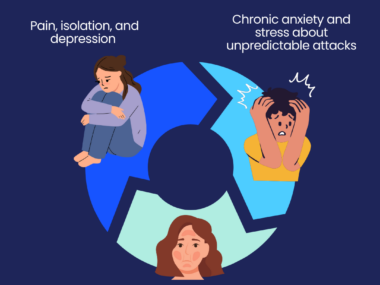
Others described the opposite experience. Trying to suppress emotions or avoid thinking about HAE sometimes made anxiety worse, and the more they tried to push away fear and stress, the more intense those feelings became. Some believed this emotional pressure even increased the likelihood of attacks.
“Many participants described how adopting an attitude of acceptance enabled them to engage more actively in life and supported their overall wellbeing. In contrast, some participants recounted times when struggling to accept their HAE led to heightened fear and anxiety, which they felt could trigger attacks and negatively affect their mental health,” the researchers wrote.
This ongoing fear could become exhausting. Some participants limited activities not because they physically could not do them, but because they were afraid an attack might occur.
“It limits me in terms of physical activities, and it makes me worried about what will happen tomorrow,” another patient, Alison, wrote in response to the survey.
Many participants described how adopting an attitude of acceptance enabled them to engage more actively in life and supported their overall wellbeing. In contrast, some participants recounted times when struggling to accept their HAE led to heightened fear and anxiety, which they felt could trigger attacks and negatively affect their mental health.
In contrast, participants who developed greater acceptance often described feeling calmer and more able to enjoy the present moment. They appreciated the “good weeks” while also preparing themselves realistically for difficult periods. Seeing attacks as temporary helped them avoid becoming trapped in despair during difficult times.
“It’s just about again, dealing with it and not letting it be in the forefront of your mind, all the time, you know. There are good weeks, good months you know, and good times. But with HAE you’ve gotta be prepared for the down times, and you know, yeah, that’s it really,” Maria said.
Many participants also spoke with pride about their resilience. Although HAE was described as frustrating and disruptive, they felt it had not completely prevented them from pursuing goals, forming relationships, or engaging in meaningful experiences.
“It’s a hell of a nuisance, but I like to think it’s never actually stopped me doing anything,” one patient, Owen, said in an interview.
Acceptance may play an important role in improving well-being, and approaches such as ACT could help patients cope with emotional distress and stay engaged in everyday life, the study found.
“For those with HAE, acceptance can be related to an acknowledgment that attacks will happen, and that they will likely experience ‘bad days’ but that these moments are temporary,” the researchers wrote.



Leave a comment
Fill in the required fields to post. Your email address will not be published.