



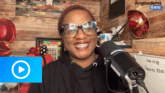
Nikki Lingineni shares how, after a hereditary angioedema (HAE) diagnosis, finding the right resources felt overwhelming, and how community and social media helped her feel less alone.
Transcript
When I was first diagnosed, the hardest resources to find were what resources I was supposed to find. I didn’t know anything about the disease, so I didn’t know what I was looking for.
All I found were textbook medical journal examples, and it didn’t look like me. And also resources for medications. Resources for other people living with the condition. Any of those, I just didn’t know what to even look for.
I first started recording myself taking my medication because I was extremely afraid of needles, so I would record myself not to actually post it on social media, but feel like someone was there watching me and I needed to do it.
I kept the videos and the first couple ones that I posted online, I deleted immediately. I was like, “I’m too scared.” I was like, “Do people want to see this? I’m terrified.”
So there was a creator. Her name was Arielle Lee, and she showed a lot of, like, the vulnerabilities that come along with HAE. Her content really helped me humanize the disease. You know, instead of looking at textbook examples, I’m seeing a real person in real time having the same freakouts, having the same symptoms.
So it made me feel a lot better. And I’m like, I don’t see that anywhere else. So I’m like, “Let let me try and see if I can help anyone else.”
So when I first started, I would cut my head off. I wouldn’t show my face. I was, I was afraid, I really was. It’s a very vulnerable disease. And to put yourself in your lowest point on the internet is, was terrifying. Now it’s not.
But I would, you know, get five views on a video and then make it private. I’d be like, “No, never mind. I don’t want to do this.” And it took me a really long time to actually start posting content.
It also took me a long time to feel comfortable talking to the camera and talking to whoever was out there that wanted to watch my content. And then I started to get a few followers and people just interested in my content.
Other people with HAE, a few medical professionals, which I appreciated them following me and being interested in the disease. Some caregivers and other people that looked like me and didn’t know what was going on with them.
I wish I was just scrolling TikTok one day and saw me. So I’m hoping that just sharing my content is going to help someone else get in the right place.
I direct a lot of people to the HAEA [Hereditary Angioedema Association] because I didn’t even know about that when I was first looking for resources, and they definitely talked me off the ledge a bunch of times when first getting diagnosed, because it’s so confusing. There’s only 7,000 people in the U.S. that I, you know, last figure that I heard, that have this disease.
So finding other people and them being someone you can relate to. So when I first started making those connections, it felt validating, right? Because your average everyday person doesn’t understand. And it’s just really nice to meet people that are like, oh, “Thank god, you look crazy, too.”