Hereditary angioedema and depression
 Fact-checked by
 The emotional burden of hereditary angioedema (HAE) can lead to mental health challenges for many patients, with depression affecting roughly a third of people with the swelling disorder.
HAE is caused by genetic mutations that result in excess levels of a signaling molecule called bradykinin, which, in turn, promotes sudden episodes of swelling that can affect any part of the body. This unpredictability, along with other factors, can place a heavy emotional burden on people with HAE and contribute to depression. HAE depression can add to psychological stress, which can, in turn, trigger swelling attacks.
Managing depression can be an important part of overall care for HAE. People struggling with their mood should let their care team know, as there are plenty of resources and strategies available to help improve mental health and quality of life.
The emotional burden of HAE
Living with HAE can take a heavy emotional toll, stemming from several factors:
- delayed diagnosis and limited awareness of the disease among healthcare providers and others
- symptoms that are painful, disfiguring, and in some cases, life-threatening
- fear and uncertainty about when an unpredictable attack will happen
- the burden of constant treatment and its side effects
- concerns about the burden HAE can place on caregivers and family members
- anxiety about passing on a disease-causing mutation to future children
- social isolation due to fear of attacks or difficulty participating fully at school or work
Although new therapeutic options have improved quality of life for people with HAE, the burden of the disease and its treatment can still have a negative psychological impact, leading to mental health problems such as anxiety and depression.
How common is depression in HAE?
Depression is a mood disorder that causes persistent feelings of sadness, emptiness, and loss of interest in activities. It can also lead to irritability, hopelessness, and social withdrawal. This is different from temporary unhappiness and may also be accompanied by physical symptoms such as fatigue, insomnia, weight changes, and difficulty concentrating.
Findings on the exact prevalence of depression in HAE have been variable, but data suggest it is more common in this group than in the general population. Studies have estimated that roughly a quarter to 4 in 10 HAE patients experience depression to some degree.
People who recently experienced a laryngeal attack may be more likely to experience mild-to-moderate depression. Some studies have also found that the mental health burden of HAE is greater in women than in men.
Causes of depression in HAE
The social and psychological challenges of HAE, such as lack of disease awareness, unpredictable swelling attacks, and social isolation, may contribute to depression in HAE.
However, some data suggest that biological mechanisms involved in the disease could also contribute. An animal study found that a receptor involved in the kinin system may play a role in depression-like behavior. However, there is not enough evidence to establish a bradykinin-depression link in people with HAE.
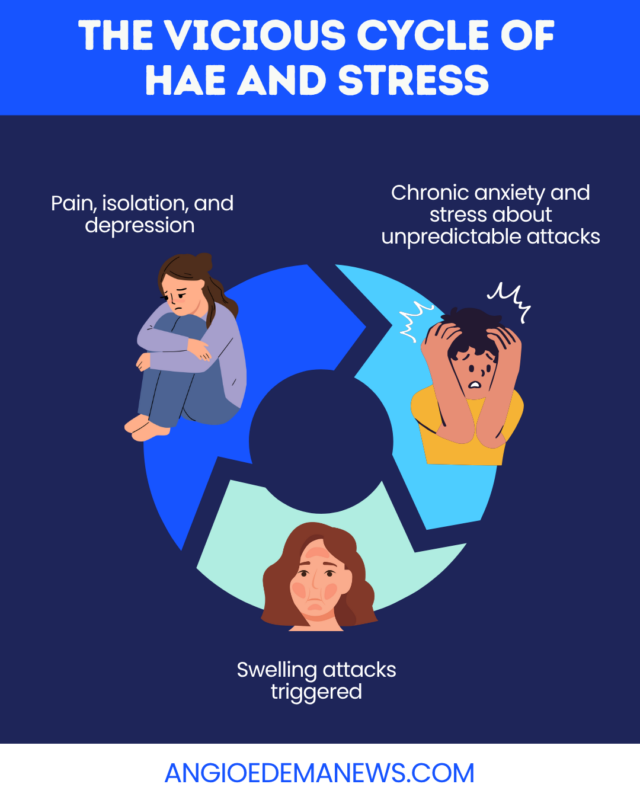
Depression may also contribute to HAE attacks because mental stress is one of the most common triggers for an HAE attack. This can create a vicious cycle in which HAE attacks and depression may worsen each other.
Managing depression and improving quality of life
There are a number of strategies that may help people manage HAE stress and support overall emotional wellbeing. These include:
- sticking to a consistent daily routine and preparing a plan for emergency situations
- getting enough sleep
- eating a healthy diet and staying active
- adopting mindfulness practices, such as meditation or deep breathing
- making time for enjoyable or relaxing activities
- seeking counseling or therapy
- participating in patient support groups
Nonprofit patient organizations such as the U.S. Hereditary Angioedema Association offer resources, including virtual support groups. These groups give people with HAE an opportunity to connect with and receive emotional support from others in the community. People can also ask their HAE care team for help finding additional support resources.
Keeping HAE well controlled may also help reduce some of the emotional burden of the disease. Following an individualized preventive treatment plan may help reduce the risk of unpredictable swelling attacks that can fuel the cycle of HAE attacks and depression.
Treatment for depression may also include medication when recommended by a healthcare professional. Any medication for depression should be discussed with the healthcare professionals involved in a person’s care.
Angioedema News is strictly a news and information website about the disease. It does not provide medical advice, diagnosis, or treatment. This content is not intended to be a substitute for professional medical advice, diagnosis, or treatment. Always seek the advice of your physician or other qualified health provider with any questions you may have regarding a medical condition. Never disregard professional medical advice or delay in seeking it because of something you have read on this website.