Hereditary angioedema and stress
 Fact-checked by
 Hereditary angioedema (HAE) is a rare genetic disease characterized by recurrent episodes of severe swelling, often referred to as HAE attacks or flare-ups, with stress being one of the most common HAE triggers.
Understanding how stress may connect to HAE attacks can help people identify their triggers, try stress management techniques for HAE, and prepare for possible flare-ups.
How is stress connected to HAE?
In most cases, genetic mutations cause HAE, which affects the production or function of a protein called the C1 inhibitor.
This protein normally helps keep inflammation and swelling under control. When it doesn’t work properly, or there isn’t enough of it, the body produces too much bradykinin, a naturally occurring molecule that makes blood vessels more “leaky” and can cause swelling.
Some research shows that stress may increase bradykinin levels. One study found that when people with HAE were put in a controlled physical stress situation, their autonomic nervous system — the part of the body that controls involuntary bodily functions like heart rate and blood pressure — became activated. This was linked to higher levels of a marker associated with bradykinin production and HAE severity.
The stress cycle
Living with HAE can create a cycle of stress and attacks. The unpredictability of when and where an HAE flare-up might happen, fear of a sudden airway closure or severe pain, and concern about passing the condition to children can all increase anxiety.
This stress may then contribute to more HAE attacks, affecting overall quality of life.
Children and teenagers with HAE may experience especially high levels of anxiety, which can worsen as attacks affect more parts of the body. Finally, adults may miss work or social activities, particularly when attacks appear in visible areas such as the face.
Ways to reduce stress-related angioedema attacks
Stress can be difficult to avoid, especially when the anxiety of having HAE may be its cause. However, there are ways to try to manage it using some HAE stress management strategies.
Take care of your overall health
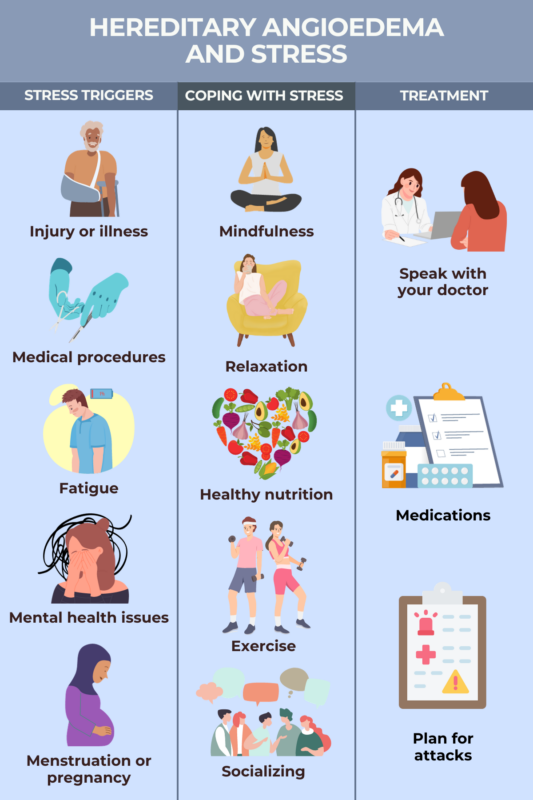
Taking care of your overall health is crucial for managing stress effectively. Some suggestions for managing HAE with lifestyle changes include:
- Eat a balanced, nutritious diet.
- Drink alcohol in moderation (or not at all).
- Exercise regularly.
- Avoid dental problems by having regular checkups.
- Get an annual flu shot.
- Practice good hand hygiene and wear a mask when needed to avoid infections.
- Spend time in nature.
You can also consider practicing deep breathing, mindfulness, or other relaxation exercises for HAE.
Get appropriate medical treatment
Discussing treatment plans with a healthcare provider can help you learn your HAE triggers, how to avoid them, and what to do during an attack.
With the right medical care, people living with HAE are often able to significantly decrease the number of angioedema swelling attacks they experience.
Additionally, trying short-term preventive strategies before known triggers, such as dental surgery or medical procedures, may help avoid attacks.
Make an action plan and stay prepared
Having a plan in place for what to do during an HAE attack may make it easier to get the right medical care when needed. Just knowing you are prepared can reduce chronic illness stress and worry.
To prepare for an attack, consider:
- creating an action plan, including noting the locations of hospitals
- always having your prescribed medications filled and up to date, especially before traveling
- carrying an HAE identification card with instructions on how to manage attacks
- providing written instructions to children’s caregivers on avoiding HAE attack triggers and managing symptoms
Identifying stress-related triggers
Learning what are common triggers for HAE attacks may help in preventing them, which may reduce stress.
Physical triggers may include:
- injury or pain
- viral infections
- dental or medical procedures, including surgery
- hormonal fluctuations (menstruation, pregnancy, breastfeeding)
- allergens
- physical activity
Emotional triggers may include:
- school or work issues
- major life changes
- anxiety or depression
- lack of sleep
- travel or scheduling disruptions
Keeping a journal about the attacks can be helpful when discussing treatment with healthcare providers. Consider tracking:
- the date and time of your flare-ups
- possible triggers (emotional or physical)
- swelling location and severity
- treatment method
- treatment response
Managing stress in daily life
Even with preventive measures, stress still arises in daily life. Managing day-to-day stress can improve your overall quality of life and may indirectly lead to fewer HAE attacks.
Have a daily routine
Creating a consistent daily routine can help lower anxiety. Try to maintain regular sleep and meal schedules, exercise regularly, and plan activities to minimize unpredictability.
Prioritize your mental health
Prioritize taking care of your mental health. Mind-body techniques for HAE, such as meditation and mindfulness, can help promote relaxation and reduce stress. You can also reach out to a therapist who specializes in treating people with chronic illnesses.
Lean on your support system
Support from others can also make a big difference. Nonprofit patient organizations, such as the U.S. Hereditary Angioedema Association (HAEA), can offer emotional support for people living with HAE.
Sharing your experiences with family, friends, or support groups can provide additional reassurance and understanding.
HAE attack coping strategies
You can’t always prevent an HAE attack, so it’s essential to know how an attack feels and how to respond.
Start by talking with your family members and caregivers about what to do during an HAE attack. Don’t hesitate to ask for help during an attack or if you feel one starting.
Other people in your or your child’s life, such as your coworkers or their teachers, should also know how to respond. Consider providing them with a written explanation of HAE and how to respond to an attack.
During an attack, it can be helpful to focus on calming strategies to reduce anxiety. Deep breathing, mindfulness exercises, listening to soothing music, or spending time with a companion animal can help you feel more comfortable and in control.
Angioedema News is strictly a news and information website about the disease. It does not provide medical advice, diagnosis, or treatment. This content is not intended to be a substitute for professional medical advice, diagnosis, or treatment. Always seek the advice of your physician or other qualified health provider with any questions you may have regarding a medical condition. Never disregard professional medical advice or delay in seeking it because of something you have read on this website.